
In-cabin driver cameras: The benefits for fleets
September 29, 2026Artificial intelligence, new privacy protections, and mounting pressure from insurers are reshaping how fleets use cameras—and how drivers feel about them. Here's an overview of in-cab cameras and how to roll out a program drivers will get behind.
What you’ll learn in this article:
- AI-powered driver cameras now catch more, with fewer false alerts, and can flag issues like driver fatigue.
- New privacy features, like facial blurring and remote camera controls, are changing how drivers feel about fleet driver monitoring.
- Insurance requirements and rising fraud concerns are turning fleet camera systems from a nice-to-have into an industry standard.
What are cabin cameras?
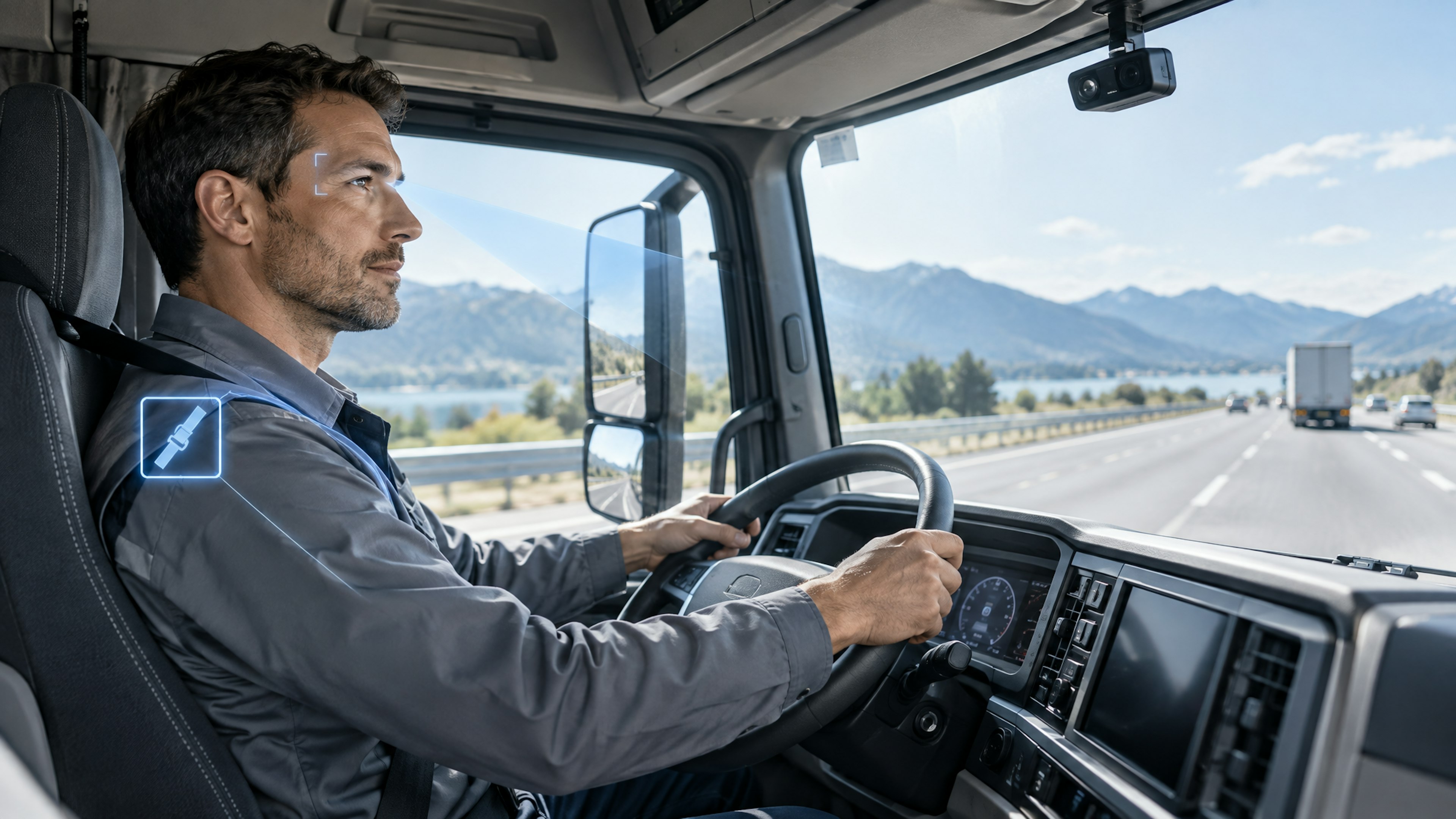
In-cabin driver cameras are mounted inside a vehicle and aimed at the driver. They’re different than the forward-facing dash cams most people know from personal vehicles, which point out the windshield to record traffic and other drivers.
A driver camera, often paired with a forward-facing lens in a single unit, captures what's happening inside the cabin. These cameras help answer questions such as whether the driver is using a phone, wearing a seatbelt, or showing signs of fatigue.
What are the benefits of fleet camera systems?
According to Julie Sams, Mike Albert's Connected Vehicle Program Manager, who works closely with video and telematics providers, the technology behind in-cab cameras has come a long way, and the benefits of their use are substantial. Here are three key ones:
Identify unsafe driving behaviors
Cabin cameras are built to identify risky behavior as it happens. Early systems flagged the basics, such as whether the driver is wearing a seatbelt or holding a phone.
“Today's cameras run AI models that learn over time,” says Sams, “so the alerts fleet administrators see are more accurate, and there's less footage to sift through to find what’s actually relevant.” She adds that newer systems can also flag signs of driver fatigue and other distracted driving behaviors in real time, giving fleet managers a chance to step in before those behaviors turn into incidents.
Mitigate liability and settle claims
Cabin camera footage gives fleet owners concrete, objective evidence of what happened before, during, and after a collision. Recording the lead-up to an accident, plus its immediate aftermath, can help exonerate drivers who did nothing wrong. Some AI dash cams now take that a step further, automatically detecting and reading license plates during collision or near-collision events and pulling that information directly into the incident record instead of requiring someone to comb through footage frame by frame.
Support driver training
Footage that highlights good habits, or risky ones, can become part of a driver training program. Newer privacy tools, covered in the next section, make this easier. Fleets can build training libraries without exposing individual drivers' identities.
How can fleets get driver buy-In?
Getting your team on board starts with clear, well-documented communication about why you're installing cameras and exactly what you're hoping to achieve.
Start the conversation
“Hold an open forum for drivers to ask questions and offer suggestions about camera use, or deploy a survey to understand their concerns,” says Sams. “Use that input to shape an implementation process that addresses your drivers' concerns. When it comes to driver buy-in, clarity and transparency rule the day.”
Establish clear parameters for camera use
Decide what will be recorded and when, and how footage will be used. For example, is the video for accident reporting and insurance purposes only, or for training and evaluation too? Newer systems give you the flexibility to establish parameters that align with your priorities and goals. “You can, for instance, include facial blurring, which protects a driver's identity while preserving the safety data behind it, as well as the ability to remotely disable a camera altogether,” says Sams. “Whatever boundaries you set with your drivers before installation, you must honor them.”
Sams notes that data questions come up often, and it's worth answering them before drivers ask. “A lot of the questions and concerns that I get from fleets focus on exactly what data is being collected, and how it’s being used,” says Sams. “I recently had a fleet manager ask if their fleet's data was being used to train the AI, and if so, who's using it and how long it's being retained. Their goal was zero data retention.”
It boils down to this, says Sams, “Fleets that can describe their data use policies clearly, before drivers have to ask, tend to see less pushback.”
Highlight the benefits
Cameras won't just help the fleet; they protect individual drivers too. A few years ago, in-cabin cameras had a reputation problem, and drivers who'd never used the technology tended to see it as an invasive, “big brother” intrusion. “I definitely think it's shifting,” Sams says. “There are still real concerns, which is why we're seeing features like facial blurring and being able to turn audio recording on and off. But it's becoming a lot more acceptable, and we're even seeing drivers requesting these cameras because of the driver exoneration that comes with it. A lot of the people driving around in vehicles wrapped with the company's logo are susceptible to fraud, and they're actually asking their fleet administrators for that layer of protection.”
A recent survey from Geotab of more than 3,500 professional drivers across Europe found that 92% had some level of concern about in-cab cameras, but an equal 92% said they'd set those concerns aside if the footage could prove they weren't at fault after a collision. Drivers aren't rejecting the technology outright; they're weighing real worries, like footage being used out of context or questions about data security, against a benefit they clearly value.
There's also an industry-wide push happening outside the cab. “It's basically becoming standard across the industry now,” Sams says. “A lot of it is the push from insurance companies. They're either saying you should do this, or you have to do this if you want to lower your rate, or if you want to work with us at all.” That pressure, combined with drivers' own growing appetite for protection, is what's turning driver cameras from an optional upgrade into standard equipment. For more on building that kind of trust fleet-wide, see Fleet safety management: Cameras, culture, and trust and Fleet driver safety.
Reward safe driving
As with most everything in life, the carrot works better than the stick. You can use camera footage and telematics data to identify and reward drivers who exemplify safe behavior, rather than only collecting evidence of mistakes.
Gamification can play a helpful role. “Some vendors offer pretty elaborate reward programs that include fancy prizes for top performers,” says Sams. “But even simple leaderboards where everyone can see where they stand can bring out the competitive spirit in everyone.”
A recent driver-incentive survey from Verizon Connect points to why that competitive instinct is worth tapping: well-designed incentive programs can improve both safety outcomes and driver retention, an increasingly valuable combination in a tight labor market. Sams recommends that fleets start small, set achievable goals for drivers at every skill level, and keep the feedback loop as close to real time as possible.
How can fleets maintain driver trust after installation?
Communication can’t stop once your fleet's cameras are installed.
“Keep building on the trust you've developed with drivers through regular check-ins about how they're adjusting to the technology and ask for their feedback as you fine-tune your processes and policies around video recordings,” Sams says. She also notes that peer input carries real weight here, so don't be afraid to lean on drivers who've adjusted well to help bring others along. You can also point to your camera program when recruiting new drivers; it's a concrete way to show that you take their safety and job satisfaction seriously.
Safety and data are a high priority for any fleet owner, and installing driver cameras is just one more way to encourage safe driving behaviors while collecting valuable data. Just remember to engage your drivers before and throughout the process. The technology has come a long way since fleets first started installing these cameras, and so have the reasons drivers have to trust it.
If you’re considering adding or building upon an in-cab camera program, reach out to Mike Albert to discuss which options are best for your specific fleet.
About the expert
Julie Sams is Mike Albert's Connected Vehicle Program Manager. She oversees the company's relationships with the telematics and video providers and serves as the bridge between those partners and the team members who work with clients every day
Skills covered in the class
Vehicle Specification
Fleet Safety
Operational Efficiency
Fleet Electrification
Did you enjoy this class?
Share it with your organization and colleagues.
Similar Classes
Fleet Fundamentals
Fuel management systems: A strategic, always-on approach to fleet fuel savings
September 1, 2026
Fleet Fundamentals
Fleet fuel efficiency: Why your drivers matter most
September 1, 2026
Fleet Fundamentals
Fleet vehicle life cycle management and total cost of ownership
August 26, 2026