How EVs can reduce your fleet costs and your company's carbon footprint. A Q&A with a fleet expert.
March 9, 2026Businesses are often attracted to fleet electrification for its potential to lower their total cost of ownership (TCO). But what can you reasonably expect from incorporating EVs into your fleet?
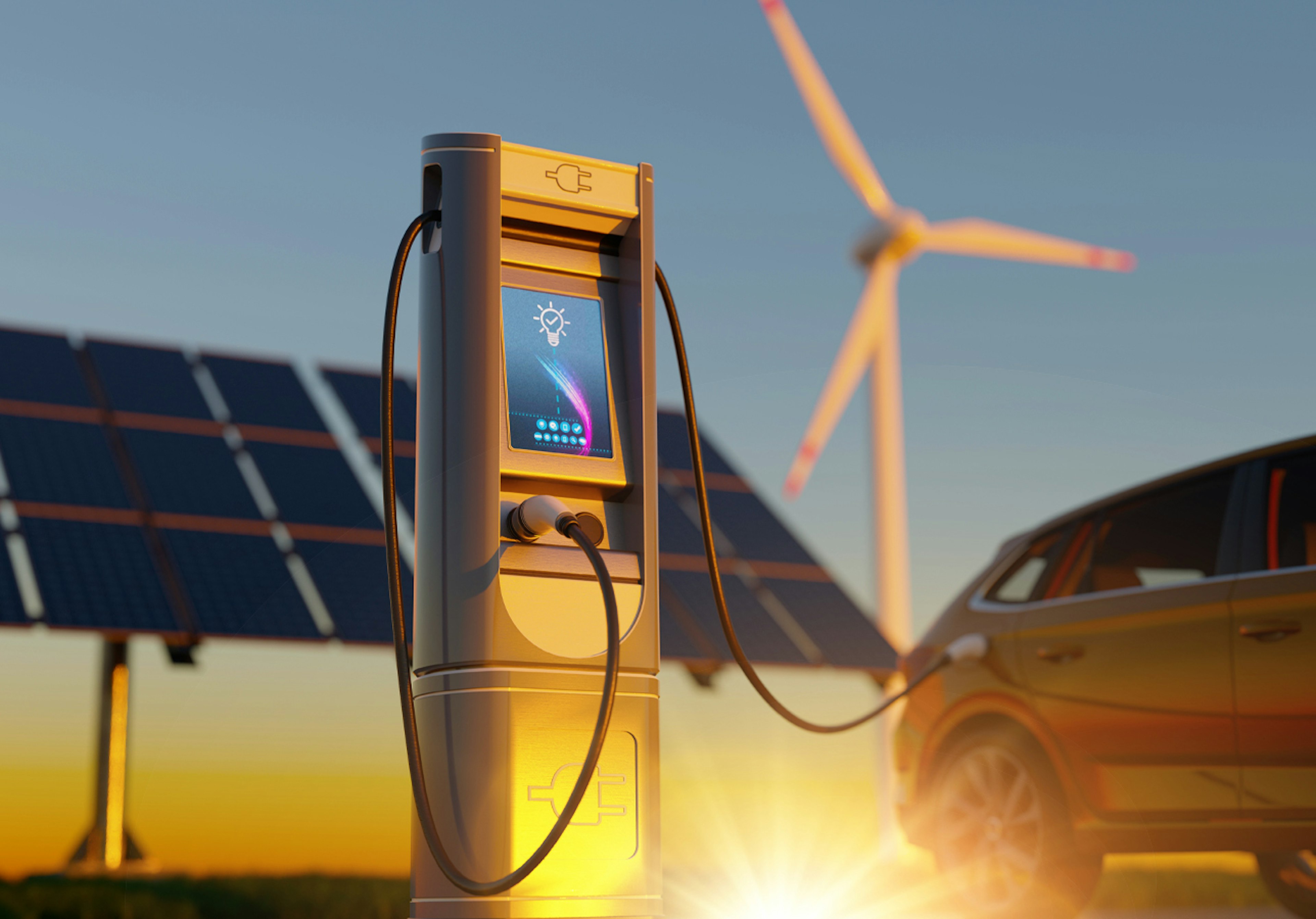
Fleets of all types and sizes continue to feel the pull of electric vehicles (EVs). Much of this attraction stems from their ability to lower TCO when compared to conventional powertrain vehicles. Of course, the allure of EVs also stems from their environmental benefits, as companies across industries seek to enhance sustainability and lower their overall carbon emissions.
However, reaping the benefits of EVs requires significant planning and consideration. To help fleet managers better understand the intricacies of EV adoption, we spoke with Jason Kraus, the Vice President of Operations at Mike Albert Fleet Solutions, to discuss what he's seeing in the industry.
Let's talk about TCO, a significant concern for every fleet. What can fleet owners expect from EVs?
They can expect significant differences—and the data continues to improve in EVs' favor. Electric vehicles don't need as many preventive services, so the standard maintenance schedule is dramatically different. Oil and oil filter changes, transmission services, radiator flushes and fills, spark plug replacements—all of that goes away with an EV. The only ongoing maintenance required for an EV consists of consumable items like tires, brake pads, wipers, and cabin air filters.
Data from multiple 2024-2025 studies show even more substantial cost advantages than previously reported. EVs cost approximately 30–50% less to maintain than ICE vehicles, resulting in lifetime savings of $4,000- $5,000 per vehicle.
These savings come from mechanical simplicity—EVs can have as few as 20 moving parts compared to over 2,000 in ICE vehicles. Regenerative braking systems mean brake components typically last two to three times longer than in ICE vehicles, often reaching 100,000+ miles before requiring service.
An EV owner traveling 15,000 miles annually could save over $1,300 in maintenance costs per year compared to an ICE vehicle. For a 20-vehicle fleet, the disparity is striking: approximately $36,600 in maintenance costs for EVs versus $60,600 for ICE vehicles over the same period—a savings of $24,000.
Energy costs also favor EVs substantially. Even in states with higher electricity rates, driving a battery-electric vehicle still saves money. EV energy costs run $50-80 per month compared to $160-200 per month for gasoline vehicles—that's about $1,300-1,500 per vehicle per year in fuel savings alone. (These estimates are based on 2026 average gasoline prices forecast by the U.S. Energy Information Administration at approximately $2.90-3.00 per gallon.)
It's important to note that robust warranties cover batteries—the federal standard requires 8 years/100,000 miles, with most manufacturers offering even better coverage. Battery costs have also dropped by over 80% since 2010, with further decreases expected through 2030.
How can a fleet management company help with determining the TCO and overall benefits of transitioning to EVs?
A good fleet management company can provide a thorough TCO analysis to support that determination. At Mike Albert, we do this by harvesting data from an organization's existing fleet—such as vehicle makes and models, when vehicles entered service, odometer readings, maintenance schedules, route characteristics, and actual usage patterns.
Then we conduct a detailed analysis to determine which vehicles are traveling where, which routes would work for an EV based on daily range requirements, charging availability, and job function, and which EV model would best fit that vehicle profile. We also factor in available state incentives, utility rate structures, and charging infrastructure costs.
At the end of the process, we provide a thorough breakdown of the company's current TCO, their cost per mile across their fleet, where EVs will work for them, projected maintenance savings, energy cost comparisons, and how EVs could change their total costs over 3, 5, and 7-year ownership periods.
As environmental, social, and governance (ESG) initiatives and carbon reduction become growing priorities for businesses, some organizations are moving toward electric fleets to reduce their carbon footprint. What are you hearing from fleet owners about balancing sustainability and environmental responsibility with operations?
According to Qmerit, currently, 64% of fleet professionals have EVs in their operations, while 87% of fleets plan some level of electrification within the next five years. Indeed, ESG initiatives and carbon footprint reduction remain motivating factors. However, company-wide decarbonization can be a daunting task.
A lot of companies decide to pursue it, but then think, "Where do I even start?" For many of them, introducing EVs to their fleets remains a logical first step toward attaining sustainability goals.
Are EVs a good way to decarbonize?
Absolutely. The latest research from 2025 confirms that EVs are highly effective for decarbonization. While there's ongoing discussion about the carbon intensity of EV manufacturing, the data is now clearer than ever.
Producing an EV is indeed more carbon-intensive than making an internal combustion engine (ICE) vehicle—primarily due to battery manufacturing. If you build an ICE vehicle and an EV at the same time, the EV's carbon footprint will be higher at delivery.
However, recent studies show EVs reach carbon parity with ICE vehicles much faster than previously thought. For typical fleet operations, EVs reach carbon parity with ICE vehicles well within standard lease periods. Most EVs now break even within 18-24 months of regular use. Given that average fleet leases run 36-60 months, this means EVs deliver 18-36 months or more of carbon savings during a typical lease term. This improvement comes from cleaner manufacturing processes and an increasingly renewable electricity grid.
Over a vehicle's lifetime, the difference is substantial. Research from the International Council on Clean Transportation shows that battery-electric vehicles produce 73% less lifecycle greenhouse gas emissions than gasoline- and diesel-powered vehicles. Over 100,000 miles, a typical gas vehicle produces approximately 42 metric tons of CO2, while an electric vehicle produces only about 15-18 metric tons, even accounting for manufacturing emissions.
The advantage grows over time because while gasoline combustion will always emit CO2, electricity grids continue to get cleaner, thanks to wind and solar power.
What's the latest regarding EV regulations?
The regulatory landscape has evolved considerably and become more complex. On the federal level, the federal EV tax credits ($7,500 for new vehicles, $4,000 for used) expired on September 30, 2025, under the "One Big Beautiful Bill Act." However, the commercial charging equipment credit remains available through June 30, 2026, offering up to $1,000 or 30% of installation costs.
State-level incentives have become more important than ever. California, Colorado, Connecticut, Maine, New Jersey, New Mexico, New York, and Oregon all offer substantial EV rebates ranging from $750 to $7,500 for standard purchases, with some states offering up to $9,500 for income-qualified buyers.
California continues to lead on regulation through the California Air Resources Board (CARB), though the landscape has changed. CARB's Advanced Clean Fleets regulation, which would have required large private fleets to transition to zero-emission vehicles, is currently being repealed following legal settlements in 2025. However, state and local government fleet requirements remain in effect, requiring 50% of new purchases to be zero-emission or near-zero-emission vehicles from 2024-2026, increasing to 100% by 2035.
CARB's Advanced Clean Cars II regulation remains in effect, requiring an increasing percentage of zero-emission vehicle (ZEV) sales: 35% by 2026, ramping up to 100% of new light-duty vehicle sales by 2035 in California and the 17 states that follow California's standards.
On the manufacturer side, the EV landscape continues to evolve. While some automakers have adjusted their timelines and strategies—with GM and Ford, for example, scaling back certain EV investments amid market shifts—commitments to electrification remain. There are 30 new EVs slated to launch in 2026, including the Honda O Series SUV and the Volvo EX60 (whose price matches that of the existing X660 plug-in hybrid).
What initial steps do you recommend for fleet owners considering a switch to EVs?
The most important thing is to ensure that your organization can support your EV charging efforts. While public charging infrastructure has improved dramatically—as of early 2026, there are about 77,000 EV charging stations with 235,000 charging ports across the country—you still need to plan and operate your company's own energy infrastructure to achieve maximum reliability and cost control. Plus, know that most of those chargers are the slower Type 2 variety. There are about 65,000 DC fast chargers at roughly 14,500 locations across the U.S., with Tesla's Supercharger network accounting for about half of them.
There are several factors to consider when establishing the proper charging framework for your fleet's unique attributes and circumstances.
For example, if your company rents the space where its fleet vehicles are kept, is it up to the building owner or to your company to decide on the power grid connection required to provide the energy needed for charging?
This is just one of the questions in the deep-dive assessment you'll need to complete to get grid access. You'll also need to work with your local energy provider to determine which on-site infrastructure upgrades may be required. Remember, the commercial charging equipment credit is available through June 30, 2026, covering up to 30% of installation costs or $1,000—so there's still a financial incentive to act. You should also consider your drivers—if they're taking fleet vehicles home, will they be able to charge them overnight? Home charging is typically the most cost-effective option and provides the greatest convenience.
Additionally, with virtually all automakers adopting the North American Charging Standard (NACS), many EVs now have access to Tesla's Supercharger network, which represents over 50% of DC fast-charging infrastructure. This dramatically improves charging access for fleet vehicles operating beyond their home base.
Proper EV energy planning and operations are vital to the success of your fleet electrification. But it can be challenging to do on your own. You may want to enlist the help of a fleet electrification partner.
At Mike Albert, we assist clients with the entire electrification process, from identifying the right EVs for their fleet to establishing their charging infrastructure to tracking their electrification results and optimizing their operations over time.
Skills covered in the class
Fleet Electrification
Operational Efficiency
Data-Driven Decision Making
Driver Retention
Did you enjoy this class?
Share it with your organization and colleagues.