Fleet DNA: How Two Women Are Changing the Industry's Genetic Code
The fleet industry has historically been a male-dominated field, but that's been changing thanks in no small part to some outstanding female professionals guiding the way.
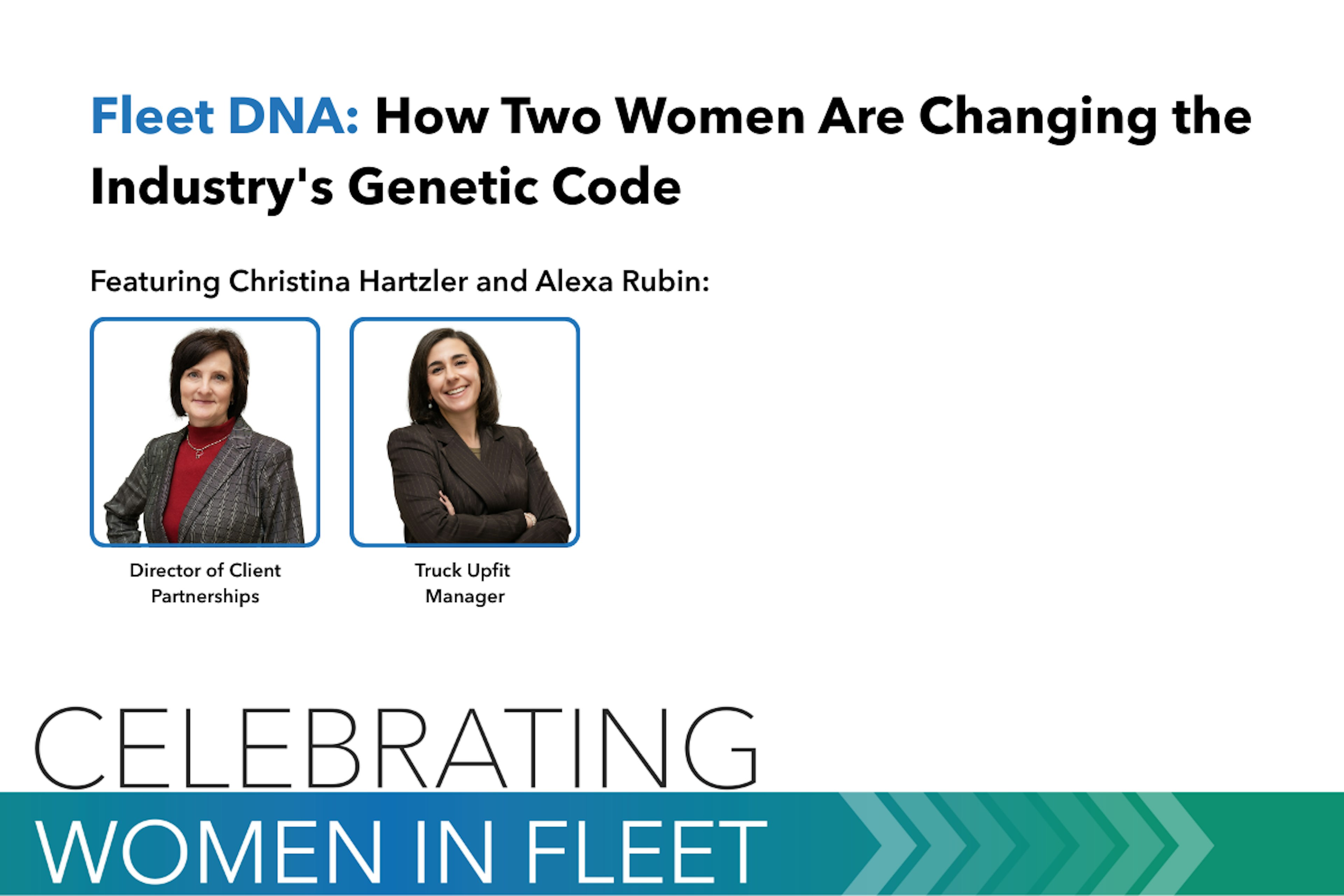
The fleet management industry has long been male-dominated, but that landscape is steadily changing. Two accomplished professionals at Mike Albert Fleet Solutions—Christina Hartzler, Director of Client Partnerships, and Alexa Rubin, Truck Upfit Manager—are not only excelling in their roles but also paving the way for future generations of women in the industry.
Christina Hartzler brings more than two decades of fleet management experience. Her career began working with her dad in the driveway on his 48 Chevy to her experience at her in-laws' car dealership before she moved into fleet management at the City of Colorado Springs in 2001, then to Xcel Energy, and finally to Mike Albert, where she counsels major national clients, including Impact Fire, Big D Construction and the Fix-It Group.
Alexa Rubin came to fleet through an unexpected path. Despite her degree in Environmental Science and Geology from the University of California, Santa Cruz, her first professional role involved logistics. Her technical expertise and passion for vehicle customization have made her a sought-after expert in truck upfitting and fleet optimization.
Interestingly, both Hartzler and Rubin know their way around a drivetrain. Both had fathers who were car buffs and taught them how to care for and maintain their vehicles. Hartzler has passed this know-how down to her own son and daughter, extending a family tradition that any fleet fan can appreciate.
In this conversation, both women share their experiences navigating a male-dominated field and their vision for increasing the number of women in fleet management careers.
What initially drew you to the fleet industry?
Christina Hartzler: I started at my in-laws' dealership in 1994, learning about vehicles from the ground up. My best friend's father mentioned an opening in the City of Colorado Springs fleet department. I went through the process twice because the woman I was replacing decided to un-retire, but I eventually won the position. I handled all preventive maintenance for the city and utilities. The software was outdated—they were using something called "Faster," which was anything but. I worked to modernize everything from the WordPerfect bids specs to the way vehicles were purchased.
Alexa Rubin: Surprisingly, this isn't what I went to school for. I have a degree in Environmental Science and Geology, but my first role involved heavy logistics, which threw me into trucking and fleet. The fast-paced, problem-solving and need for meticulous organization really appealed to my technical brain. I've also always been drawn to vehicles—from riding in my godfather's '67 Chevelle SS to watching Top Gear with my dad. Today, I modify my 2019 Honda Civic Sport Touring Hatchback on weekends. I've added a cold air intake, upgraded to LED sequential marker lights, and installed an extended tailgate spoiler.
What prepared you for the technical aspects of fleet management?
Alexa Rubin: I've been fortunate to work under leaders who invested in my development. My last general manager, Dave Taggart, has over 40 years of fleet experience. He patiently helped channel my enthusiasm into refined skills and taught me to take care of everyone from the company owner to the drivers in the field.
Christina Hartzler: It was about diving in and asking questions. The managers at Colorado Springs Utilities taught me about bucket trucks and utility vehicles, while the managers at the City taught me about dump trucks and sweepers. I became a dual fleet asset manager—writing specs, managing purchasing, and putting out bids. I managed the budget for our 4,200-unit fleet and created seven strategic alliances that saved the city over $4 million annually.
What's it like working in a technical role in a male-dominated industry?
Christina Hartzler: When I started in 2001, women in fleet were rare. It took time for managers to get comfortable with a female handling bids and specs. At first, I was viewed almost like a secretary. But as I gained knowledge and became a subject matter expert, that changed. I was looked at as the expert in the room rather than the one taking the notes. I love the industry, and it even shows in my everyday life: I drive down the road commenting on how a vehicle is or is not correctly spec’d, being utilized, or even upfit.
Alexa Rubin: Credibility comes from competence and how you show up, not gender. Commanding respect starts with speaking clearly about technical details, data, and broader context. Early on, I saw surprised reactions when I weighed in on complex topics. But once you consistently demonstrate expertise, that surprise fades. One thing I love about this industry is how many people are passionate about the work. When they see that passion in you, it bridges gaps—not just gender, but culture and age too.
Have you encountered stereotypes or assumptions about women in fleet management?
Alexa Rubin: Early in my career, running the Cincinnati operation for a fleet leasing company, I worked with a very old-school driver who moved equipment for us. When I asked him to shut off his truck for a safety inspection, he told me that he had been driving for 50 years and didn't appreciate "being told what to do" by "a girl." He avoided working with me for months. My response was to stay professional and consistent—giving him business, paying on time, and being flexible with schedules. Over time, his attitude completely shifted. By the time I left, he hugged me, told me I'd go on to do great things, and we still keep in touch.
Christina Hartzler: You have to prove yourself. When I first started at Mike Albert, I took over some existing clients from other managers. In those cases, you have to show them you know what you're talking about. But it's easier now because I can say upfront, "This is what I've done. I've sat in your seat. I know what you're up against." That gives them relief and builds trust in the perspective I bring to the table.
Did you have mentors who helped guide your career?
Christina Hartzler: I had great bosses at the City of Colorado Springs. But my most impactful mentoring came from the procurement side—Pat Morgan and Chris Lindquist at Colorado Springs Utilities and Cheryl Rea and Curt DeCapite at the City. They taught me to demand respect and to have a voice in the room. Of course, that only comes from knowing your stuff and being passionate about the business and the role the fleet plays in it.
Alexa Rubin: When I first entered the industry in Cincinnati, my branch manager in Columbus, Janie Hopkins, was one of the only other women in our entire region. Watching her lead a high-performing team while landing in the top three for sales was inspiring. She modeled that it's essential to be vocal about your needs and call out when something isn't right. Her example taught me that advocating for yourself is critical to driving results and advancing your career.
What advice would you give to women interested in entering the fleet industry?
Alexa Rubin: If this work genuinely interests you, trust that instinct. If you enjoy problem-solving or are interested in vehicles, the fleet industry is worth serious consideration. It's stable and essential—companies will always need fleets. The industry needs fresh perspectives, especially around technology, process improvement, and driver experience. There's growing demand for people who can think about telematics, data analytics, and systems integration. Fleet touches everything from OEMs and upfitters to leasing and technology providers. If you bring passion and willingness to learn, there's absolutely a place for you.
Christina Hartzler: You can't eat a whole elephant—take it step by step. Ask questions. Don't ever be afraid to ask. Be honest: "I don't know that, but let me look into it." And then once you know it, you have to have a backbone. If you don't have thick enough skin to take criticism and stand up for yourself, you're not made for fleet. I recently had a team member who kept apologizing, and I told them to stop. I said, "I'm going to get you to a confidence level where you say, 'This is why I did what I did,' rather than, 'I'm sorry.' " Fleet is ever-changing, and that is also what makes it a fun yet challenging career.
Do you think the industry is doing enough to attract and retain women?
Christina Hartzler: The situation has definitely improved over the past two decades, but there's more to be done. I'd love to see more women in management and leadership positions, like our Chief Operating Officer at Mike Albert, Amy Hudson. I'd also like to see more mentoring programs. If more women in the industry were to band together, we could mentor every woman interested in succeeding in this field.
Alexa Rubin: The industry is improving, for sure, but there's room to be more intentional. I've seen a fundamental shift toward valuing women in this space. Many fleet professionals come from dealerships and service support, where women have historically had a more substantial presence. The fleet industry often rewards people who deliver results. When performance and problem-solving are what get noticed, that transcends traditional gender roles. The next step is moving from passive acceptance to deliberate strategies—mentorship, sponsorship, and clear advancement paths to ensure women not only enter these roles but thrive in them.
Any final thoughts for women considering a career in fleet?
Christina Hartzler: There are so many different areas—upfitting, holistic management, manufacturers, and more. If you have a desire to be in the automotive industry, go for it! I've even worked in racing, SCCA, Trans Am series, Rally America, and at the Pikes Peak International Raceway, among others. There's a lot you can dive into, and there's always somebody who will help. Find the right people, have the passion and ask questions, lots of questions. Then develop a POV that you confidently defend.
Alexa Rubin: Don't underestimate the breadth of opportunity. We need people who can translate between the technical and the practical. If you bring passion, professionalism, and a willingness to learn, there is absolutely a place for you here. The industry is evolving rapidly, creating space for new voices and perspectives. The door is open—you just have to walk through it.
Skills covered in the class
Data-Driven Decision Making
Mobility-Mindset
Operational Efficiency
Vehicle Life Cycle Analysis
Did you enjoy this class?
Share it with your organization and colleagues.