Fleet Leasing and Funding
The Right Fleet Leasing Strategy for Your Business
Your fleet leasing strategy should work with your business goals, not against them. We help you centralize your data and leverage your scale to drive measurable results.
Schedule a Consult


What's Included
Download the full feature list
Close-End Fleet Lease
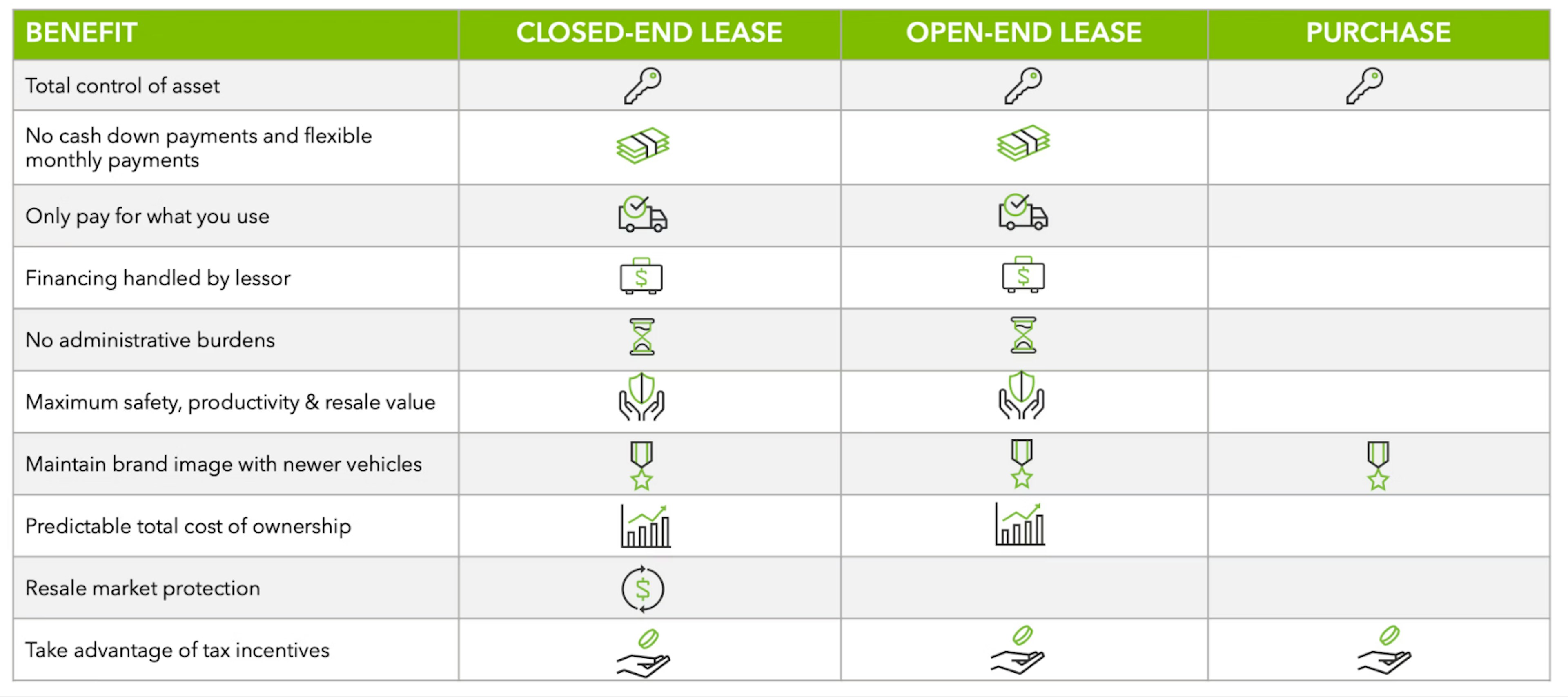
Eliminate price guesswork. The lessor assumes the depreciation risk, providing fixed monthly payments and total cost predictability. Ideal for businesses on strict budgets that want to return the vehicle and walk away.
Open-End Fleet Lease
Terminate your lease whenever you'd like after the minimum term. You take on the depreciation risk but gain unlimited mileage and the flexibility to purchase the vehicle or turn it in for resale.
Strategic Life Cycle Planning
We benchmark your performance against historical data to determine the optimal time to cycle vehicles. This proactive approach reduces downtime and helps ensure you aren't tying up cash in depreciating assets.

Customized Funding Strategy
Not sure what's right for you? Our experts create a collaborative plan unique to your business, aligning with your EBITDA goals, cash flow requirements, mileage needs, and upfit considerations.
Why Lease?
Business vehicles are assets that should drive profit, not drain capital. Leasing through Mike Albert helps keep cash free for your core business, makes costs predictable, and puts drivers in newer, safer, fuel-efficient vehicles. Planned replacement cycles reduce surprise repairs, improve uptime and brand image, and make it easier to scale for busy seasons or new contracts.
Frequently Asked Questions
In a closed-end lease, the lessor assumes the depreciation risk; you pay a fixed amount and return the vehicle at the end. In an open-end lease, you assume the depreciation risk but gain more flexibility with mileage and termination dates, with the potential for a resale gain or a final adjustment based on market value.
Right-sizing involves analyzing utilization to ensure you have the right number and type of vehicles to serve clients. By identifying underused vehicles, you can reallocate units to other locations or sell them to free up cash—so you're not paying for assets that aren't producing value.
As you add locations, you can't manage by "walking the lot." Centralizing data lets you compare costs across divisions, identify best practices, and create consistent programs that improve visibility and decision-making across the organization.
Open-ended leases often include a Terminal Rental Adjustment Clause (TRAC), which provides for a final adjustment at the end of the lease based on the difference between market value and residual value. This structure supports flexibility and can contribute to lower monthly payments, while requiring comfort with end-of-term market variability.
We’ll find the fleet leasing strategy that’s right for you
The coordinating and facilitating of administrative tasks takes away time from focusing on the most important thing, which is running my business. Taking away that pain and hassle is worth every penny.
Dennis ChaissonOwner, Dring Air Conditioning & HeatingWe meet twice a month with Mike Albert. They help us monitor maintenance costs, forecast auction prices, and anticipate impact from the new vehicle market so we can strategically cycle vehicles.
Ashley LuciaNational Fleet Manager, Impact Fire